
Objective and obstacle
What is conflict in an acting scene?
Conflict is an objective meeting an obstacle. Your character wants something, and something prevents them from getting it. The obstacle may come from the other person, the circumstances, or the character's own competing need. Your work is to pursue the objective, not to demonstrate conflict.
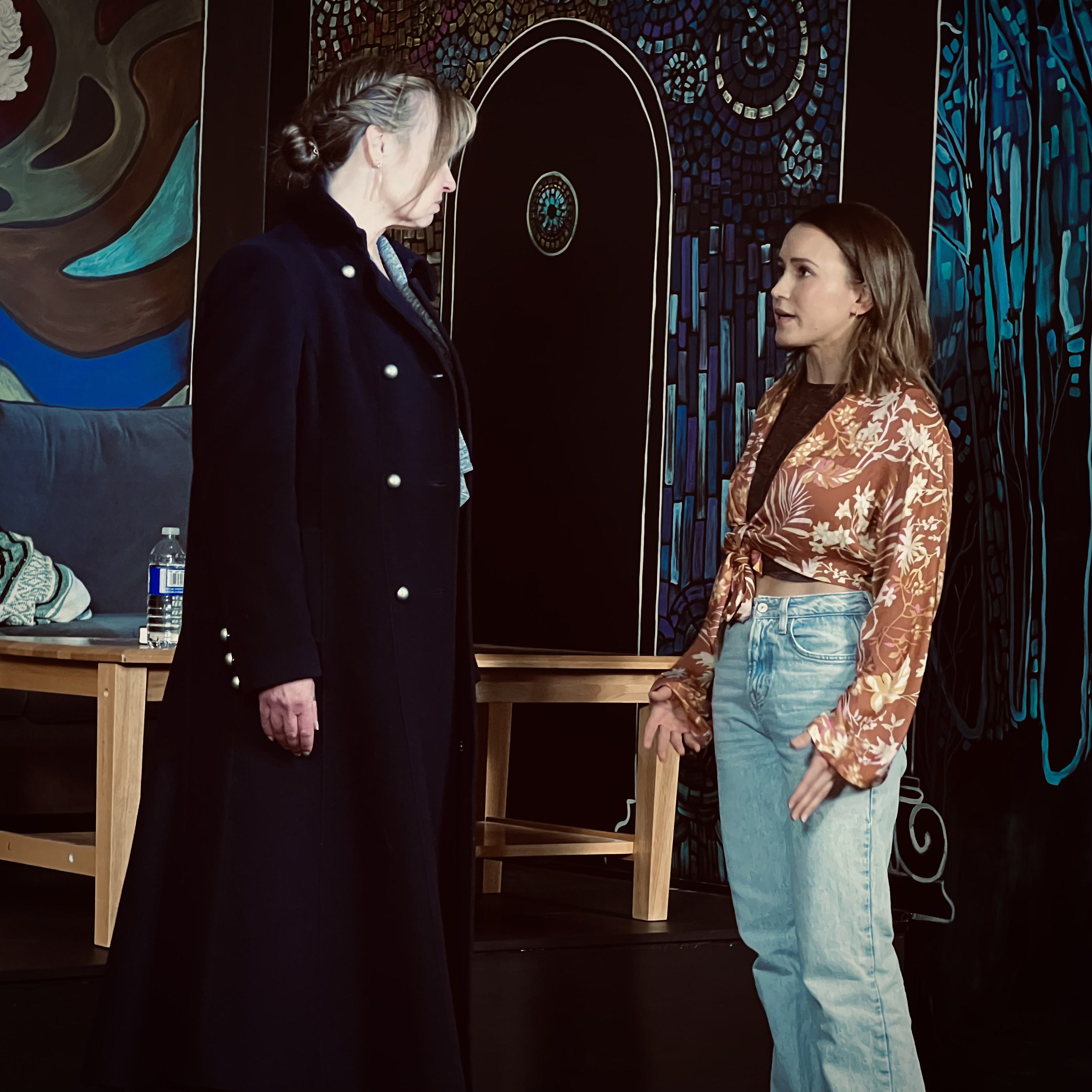
Conflict is not the same thing as arguing.
A quiet scene can carry enormous conflict. A loud scene can have almost none. Volume tells us how a person is behaving. Conflict tells us why the scene cannot settle.
When two characters approach the same issue from different points of view, each person becomes part of the other's obstacle. That resistance gives the scene pressure.
Find the engine of the scene.
- 1
Name what you want
Use a result you need from the other person. Keep it simple enough to pursue moment by moment.
- 2
Name what stops you
Look at the other person's behaviour, the circumstances, and anything inside the character that pulls against the stated goal.
- 3
Read the counterpoint
Ask what the other person wants and why your approach does not work on them. Their point of view creates useful resistance.
- 4
Choose an action
Turn the objective into something you can do: reassure, corner, wake up, disarm, punish, protect, or win over.
- 5
Let the tactic change
If the first approach fails, do not repeat it louder. Listen to the result and try another way to get what you need.
A quick conflict check.
- Can I say what I want without naming an emotion?
- Can I identify what the other person is doing that makes it difficult?
- Is there an internal truth pulling against my external goal?
- Does my action give the other actor something to respond to?
- Can my approach change when I meet resistance?
A practical rehearsal test.
Play the scene once without trying to show its mood. Pursue one clear result from the other person. Each time your approach fails, let their response force a new tactic.
Afterward, ask where the resistance became clearest. That moment usually tells you more about the scene than a preselected emotional shape.
Explore RAW's scene-work path